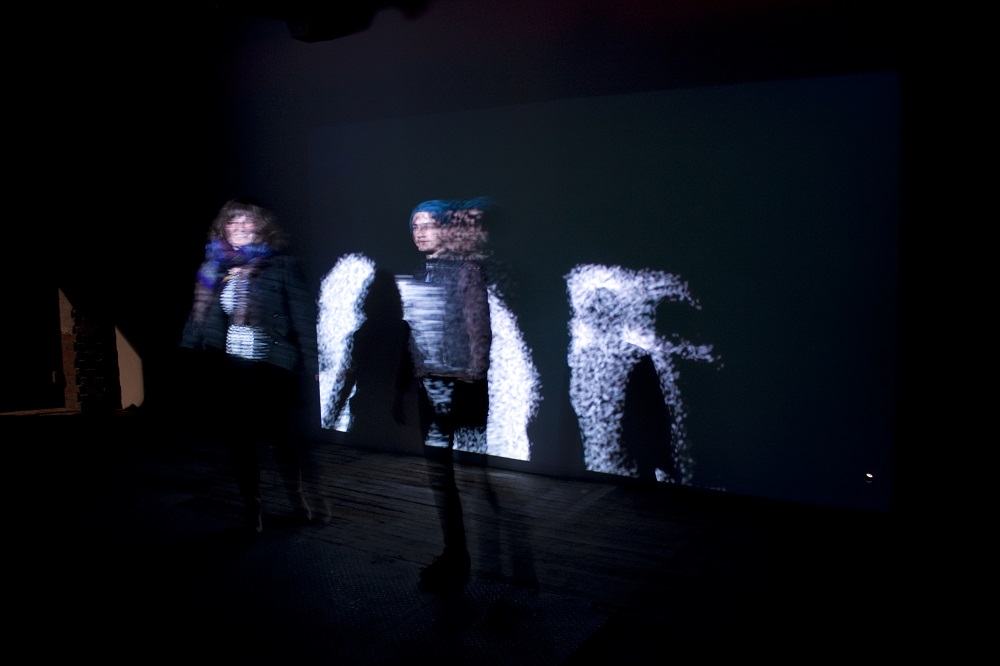
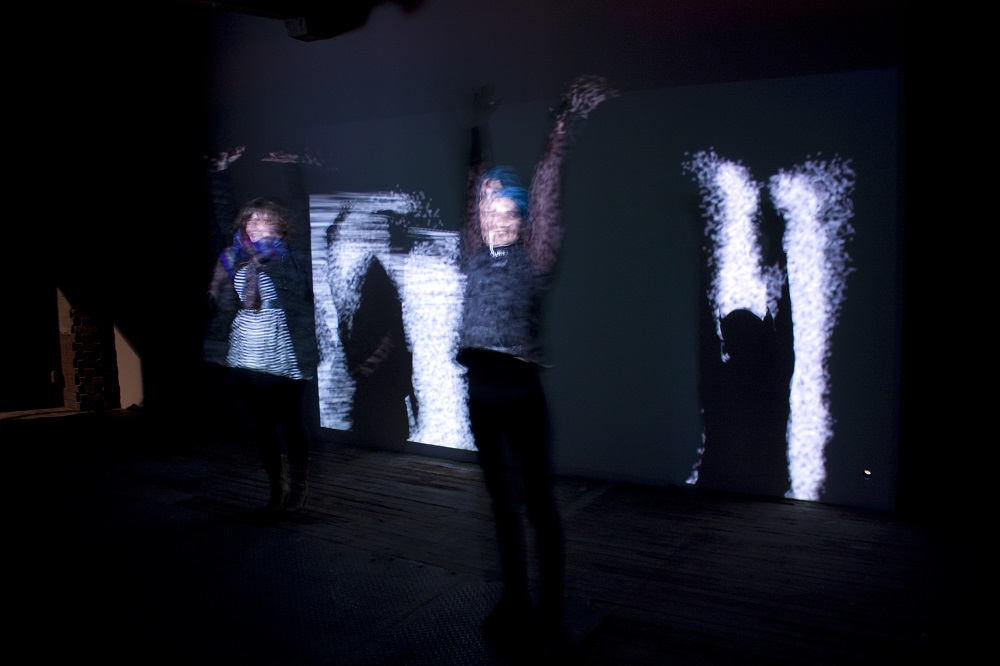
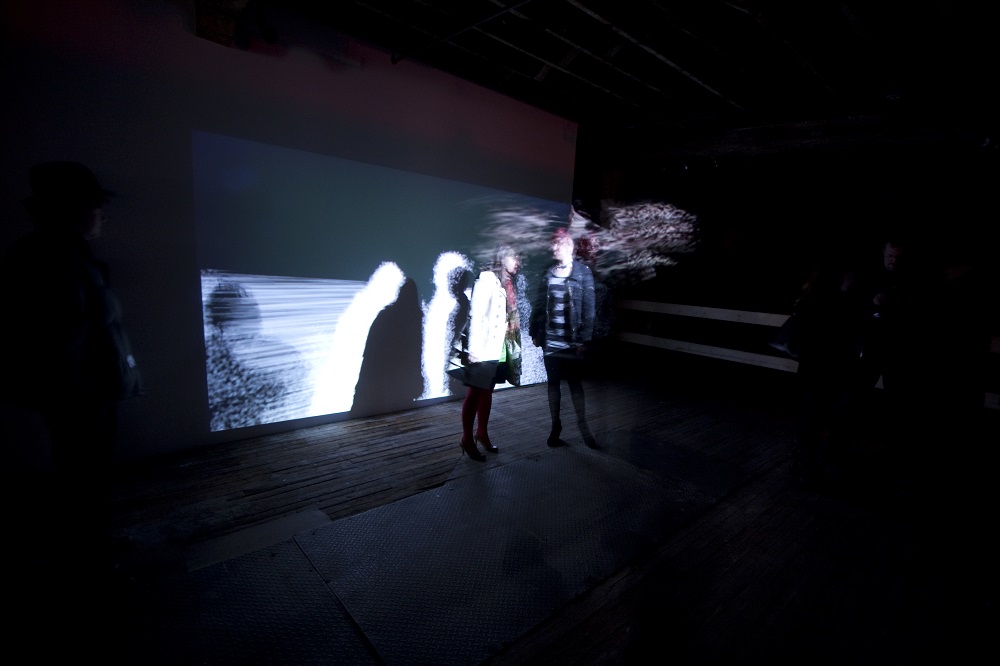
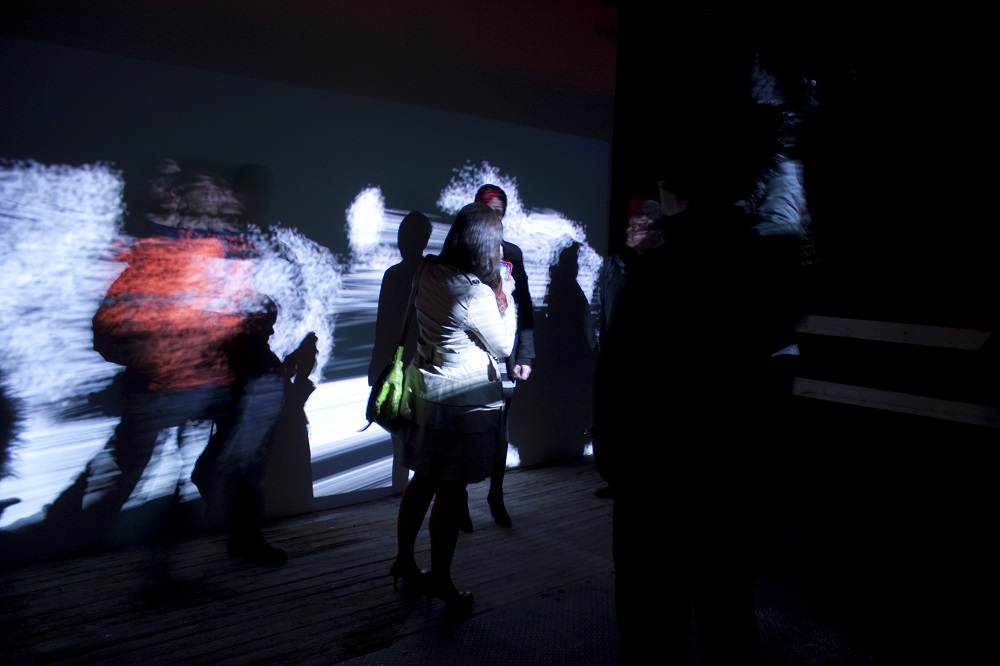
Wire less is a visualization and exploration of electromagnetic space and its effects on identity and the body.
Humans naturally give off electromagnetic radiation, but as we store more digital information on us through technologies such as cell phones and laptops, that radiation grows exponentially and in complexity. These wireless emitting devices are not only communication tools but also sensors of the invisible electromagnetic environment that surrounds us. They make us aware of what is called Hertzian space, the cloud of electromagnetic radiation that is always around us. This space not only envelops our body; our body is a mediator of it. Our neurological synapses intertwine with the data we transmit.
With increased use of wireless technologies to interface between humans, we sift our bodies through this electromagnetic space, exposing, disassembling, and dispersing our identities to the open air. We text message through unencrypted networks, browse Facebook under corporate surveillance, and curate pictures for peers to interpret us. As we leave these fragmented traces, others then compile and reinterpret them as our imaginary present.
Utilizing 3D body tracking and ambient radio frequency sensors, Wire less deals with the state of our bodies in a saturated world of overlapping and scrambled signals that we sense but cannot see. Wire less seeks to make these invisible signals visible. This leads to a new cartography where the merging of our projected, virtual selves now coincides with our physical, current selves. We no longer look at the screen and see a digital echo, a modern mirror image of us; rather, we have become a version of Narcissus that has fallen into a sea of self-created reflections. Our bodies remain but are engulfed in distorted radiation.
All life is linked by electromagnetic activity, yet most of this action takes place outside the spectrum detectable by human sensation. Although we see the light and feel the warmth that the sun radiates, we don’t see or feel the enormous solar blasts that throw waves of electromagnetically charged particles into the earth’s atmosphere—but our wireless devices do. Whole city power grids can be knocked out by solar eruptions, which cause radio wave blackouts, satellite and airport navigation system malfunctions, and heightened northern lights auroras.
Our relationship to electronics influences our relationship to electromagnetic fields. In the electronics age, our ability to manipulate electromagnetic currents restructured culture. Power grids began to shape city plans, and almost every activity came to be organized around the availability of electrical outlets. Rechargeable batteries and wireless technologies liberated us from the wired grid and made our interaction with electronic devices more ubiquitous and increasingly intimate. Today, our bodies are the sites of endless reception and transmission of wireless communication, which produces new currents of radiation flow around and through our bodies. Artist Anthony Tran was born and raised in the hyperconnected environment of wireless digital technology, and he rejects the division of the world into animate and inanimate objects, organic and inorganic matter, nature and machines. Instead he explores the dynamic field of radiation and electromagnetic current that links men and women to their smartphones, GPS devices, iPads, laptops, game systems, RFID tags, and more.
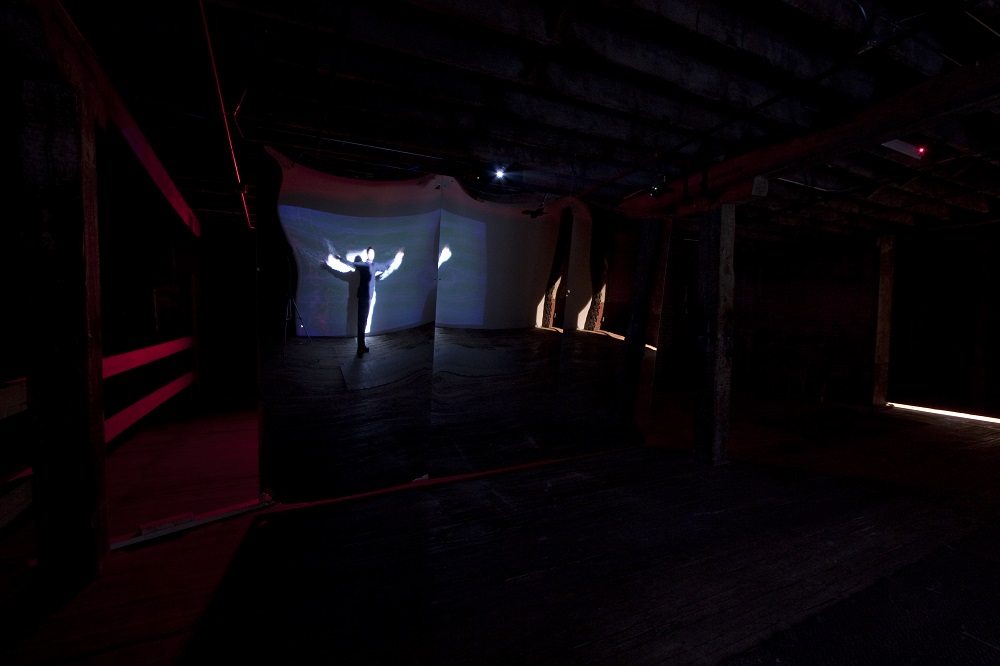
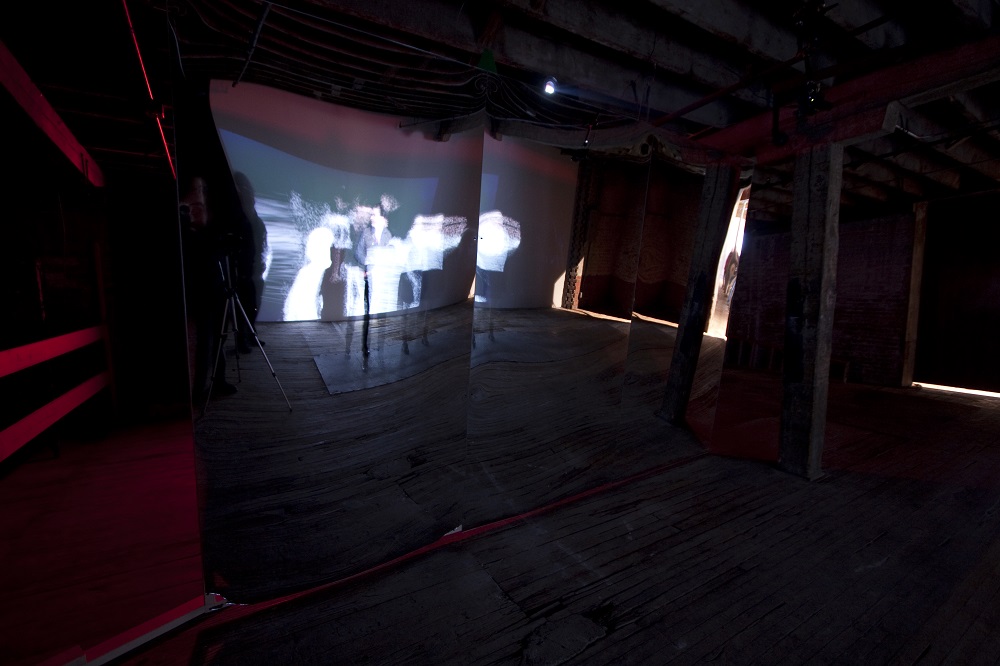
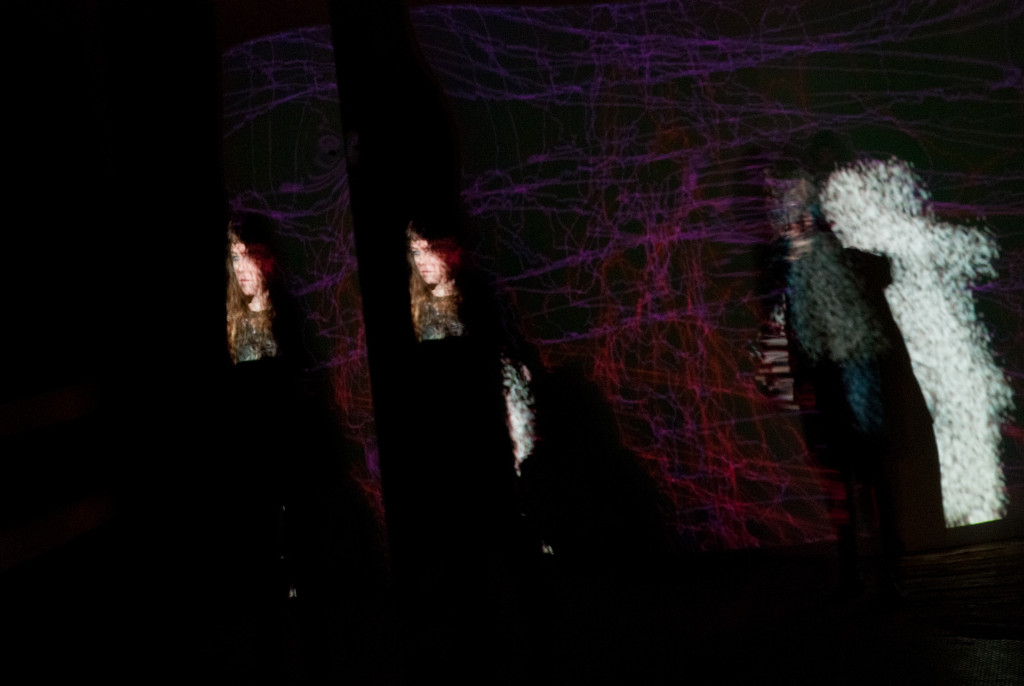
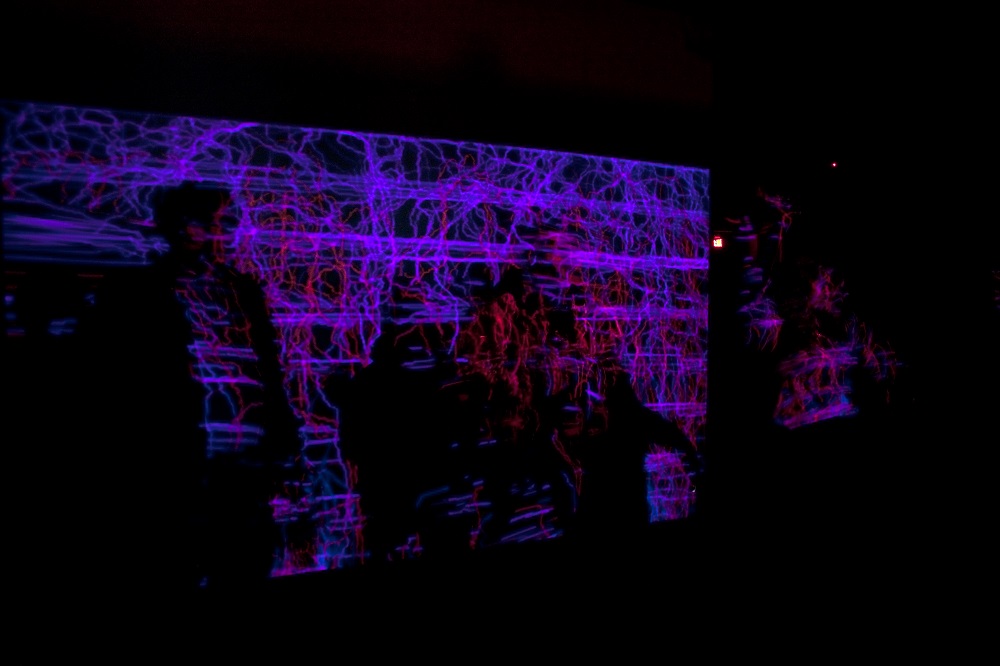
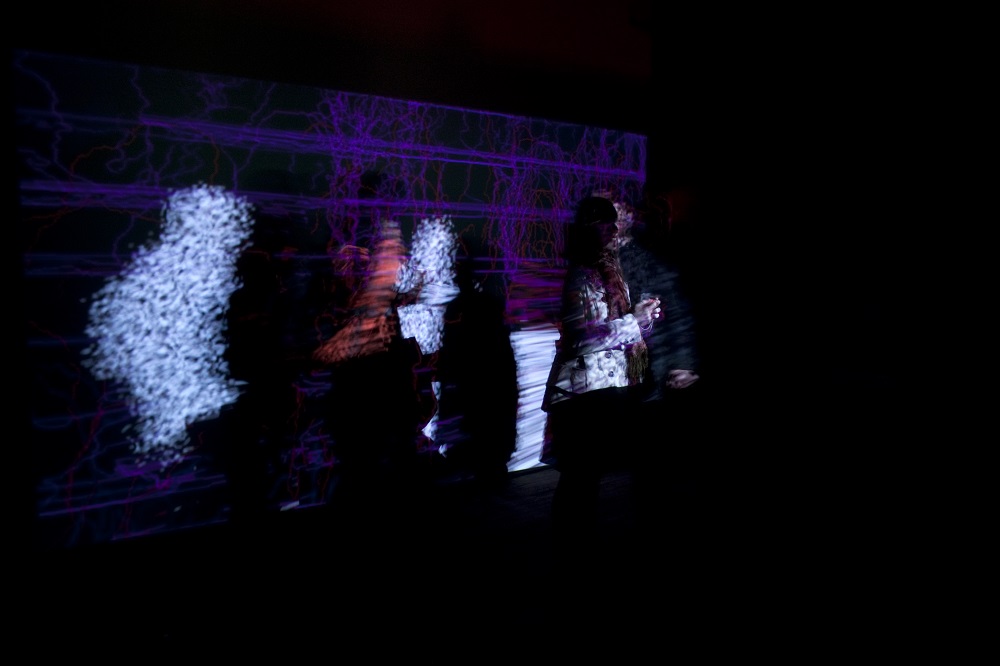
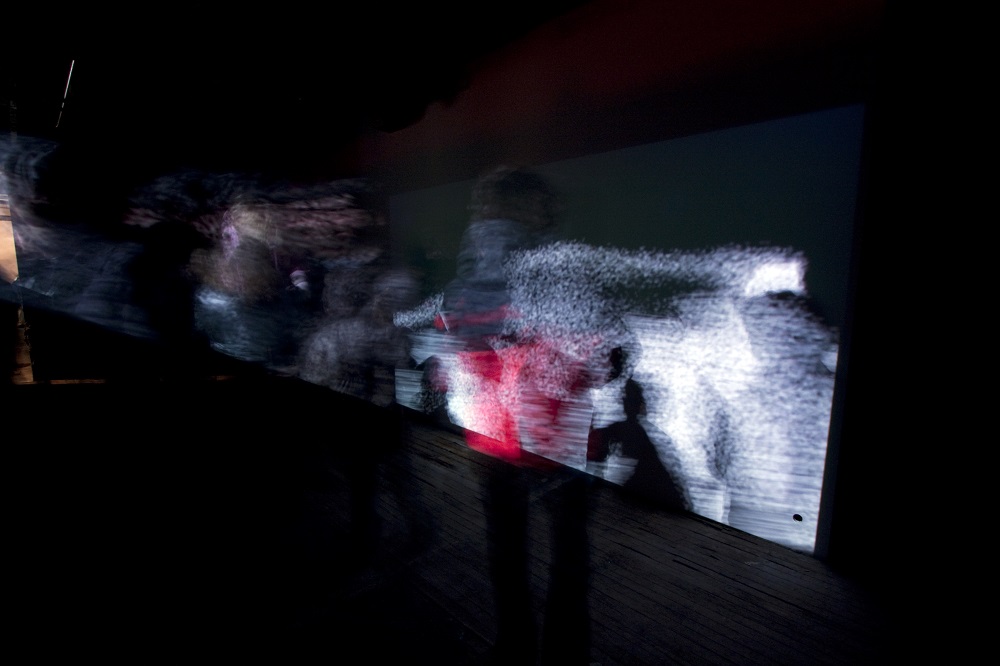
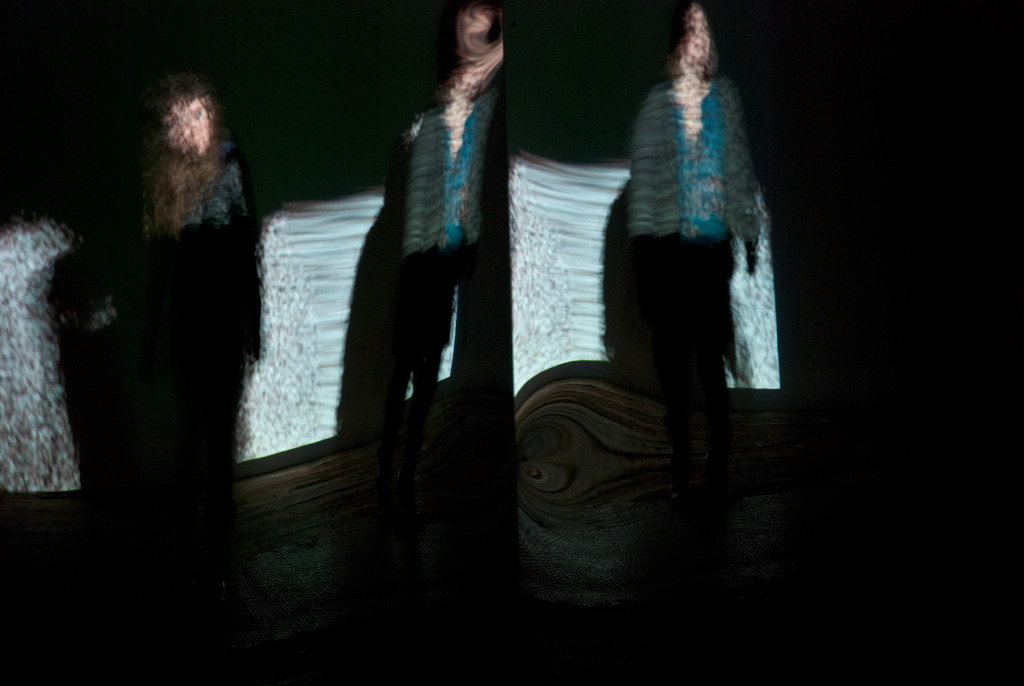
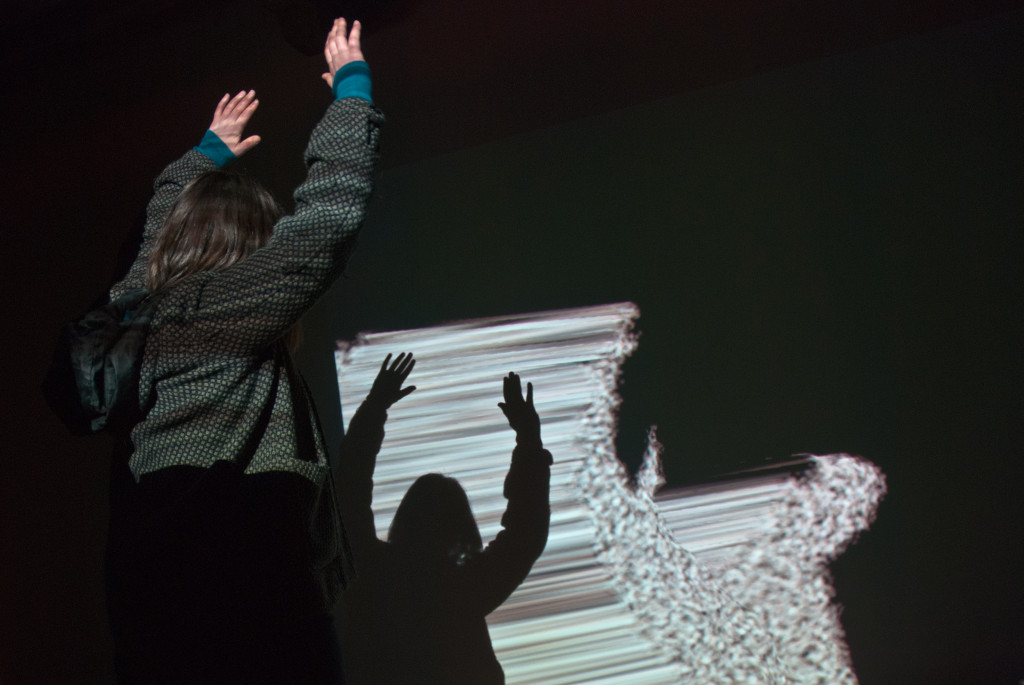
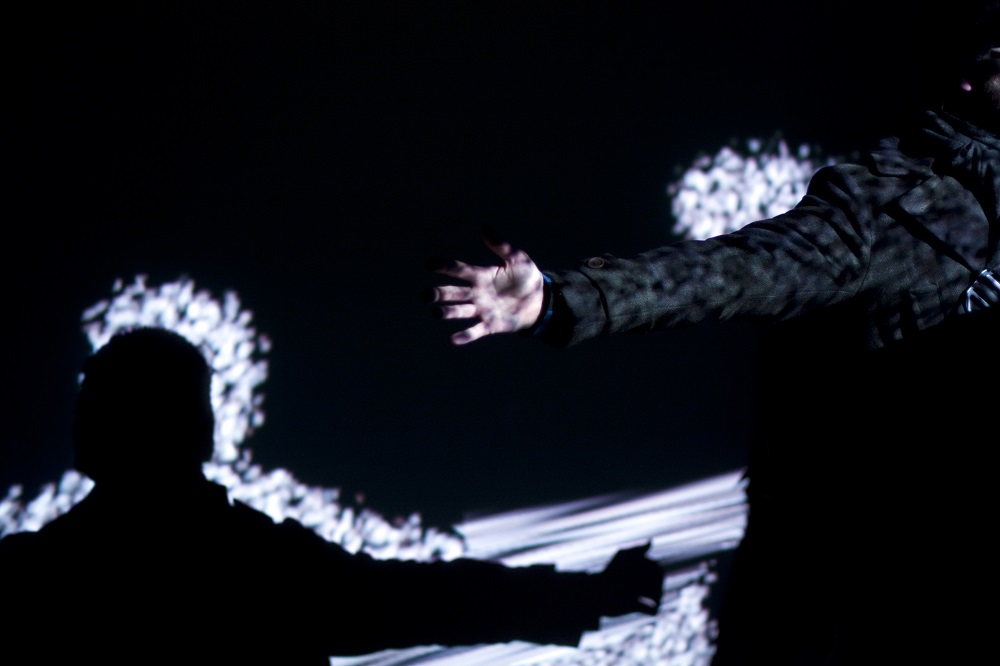
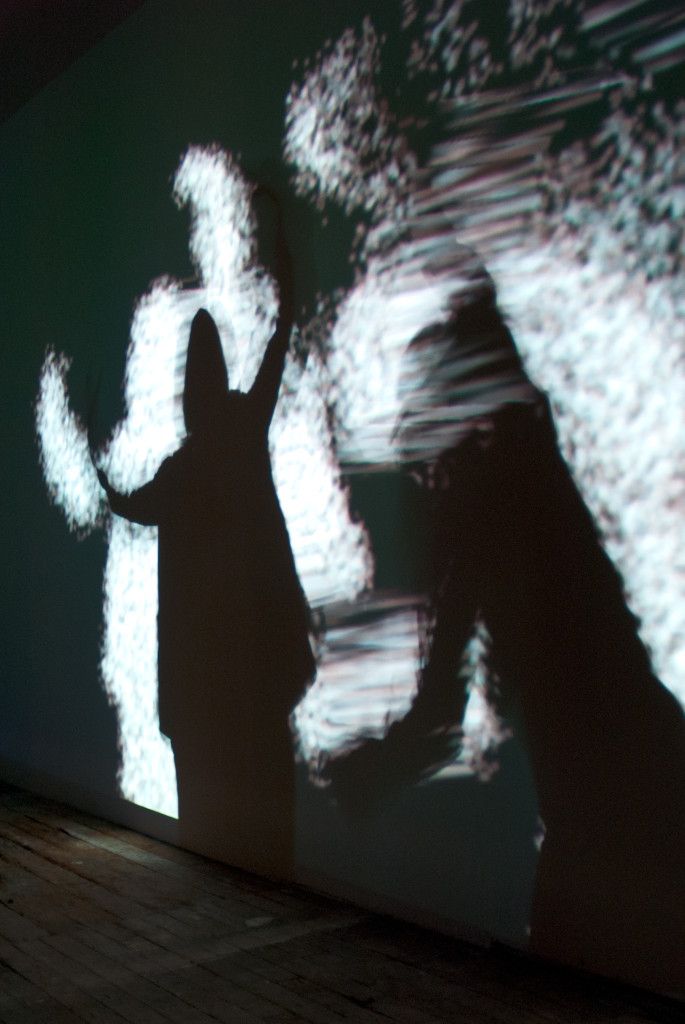
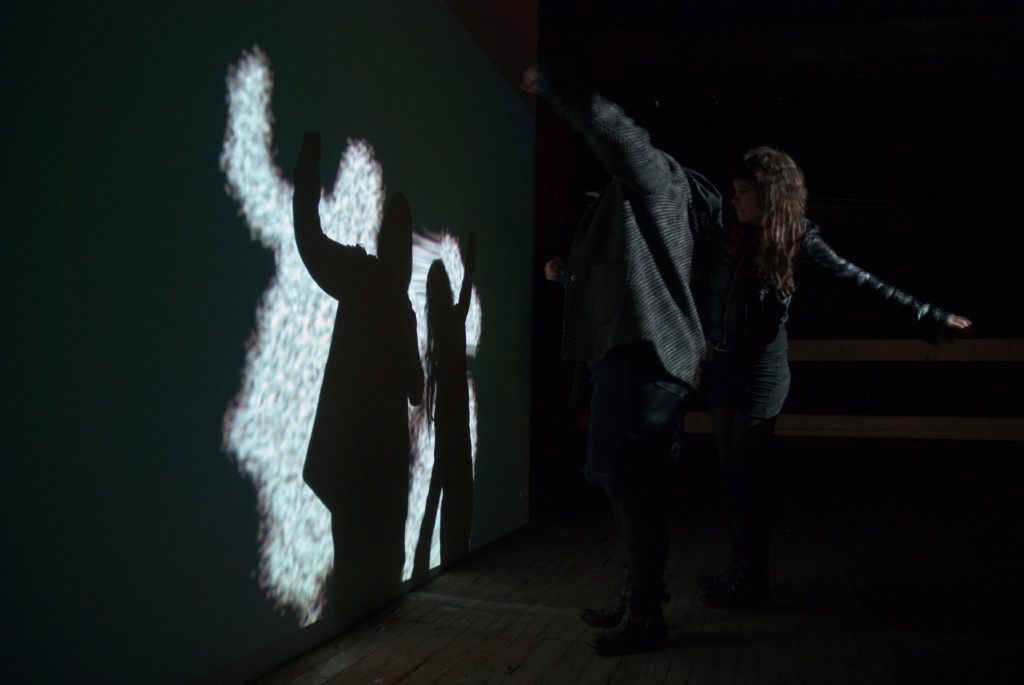
In Wire less, Tran defamiliarizes the real by manipulating the rules of vision. The viewer enters this installation in complete darkness, but Tran’s technology reads the viewer’s presence, maps the body, and uses it, in turn, as a screen for its transmission of a projected pattern of light. Mapped by 3D sensing software, this projection clings to the viewer’s body like a transmission successfully received. In moments of illumination, the viewer catches glimpses of his or her body lit by these pattern transmissions in large mirrors placed at one end of the gallery.
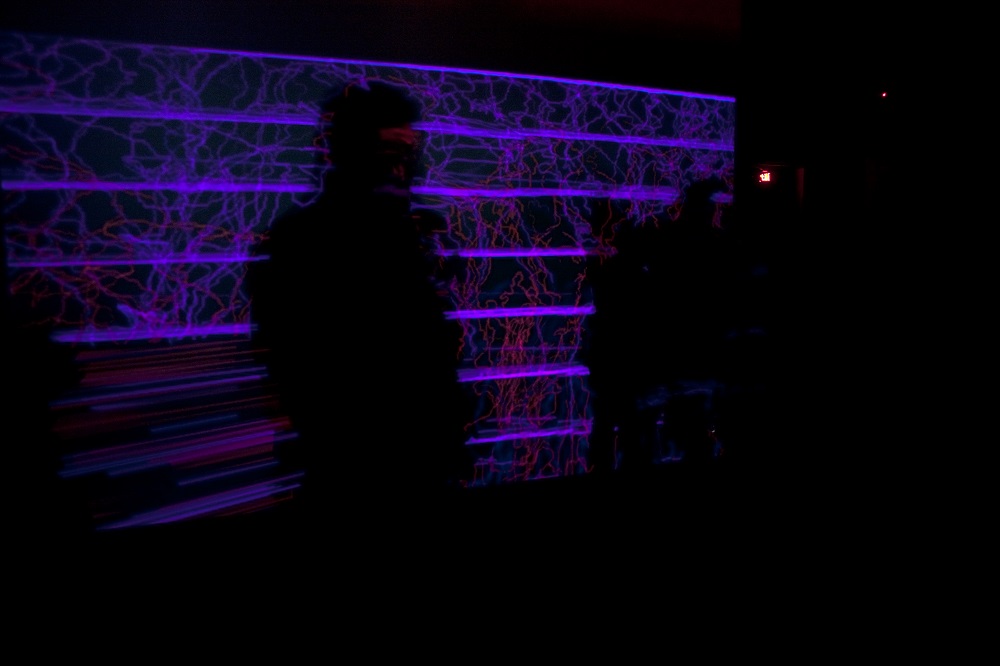
When the sensors in Tran’s installation machines register heightened levels of radiation–electromagnetic activity (usually emanated by personal electronic devices), they generate a new picture that maps the viewer’s silhouette in red and purple light. These colors exist at the edge of human perception and represent currents of invisible radiation circulating around and through the body. Tran’s software configures a pattern of fluid movement that is projected toward the viewer’s body but not onto it. Again, catching the mirror’s reflection, the viewer sees an aurora of light glowing around the darkened shape of his or her body. Tran’s installation shows the human body at the center of an eclipse representing the radiation generated from the body by the electronic devices that gravitate around it.
I am passionate about science and art. The blurring of the two domains pervades the modern world, as it increasingly becomes more collaborative and connected. Contemporary digital art inherently mingles with art & science as well as the reinvention of the present to create the future. My work delves into the feedback loop that occurs between machine and man. Through creating spaces that are neither completely virtual nor fully real, I attempt to extend reality into a space that is transitional. I believe that this is representative of our time as there is still a gap between human consciousness and computer logic. Through making this explicit, I hope to lessen this gap and thus progress this transition, while realizing that it is the problemitization of the past and present that informs this future.
b. 1989, New York, New York
works St. Paul
mentor: Christopher Baker
As a new media artist, researcher, and technologist, I create temporary spaces to expose the relationship between technologies and the extrasensory mythologies they produce, and I reappropriate recently mass-adopted technologies to subvert their persuasive notions of security and reliance. We live in a society obsessed with the “new,” and we often let our guard down to embrace the so-called promise of the future. I seek to bring a hyperawareness of the present through modern cultural artifacts—to bring heightened awareness to a very externally focused world.